微信公众平台
Chinese conservationist explores community-based wildlife protection in Kenya_我的网站

A |
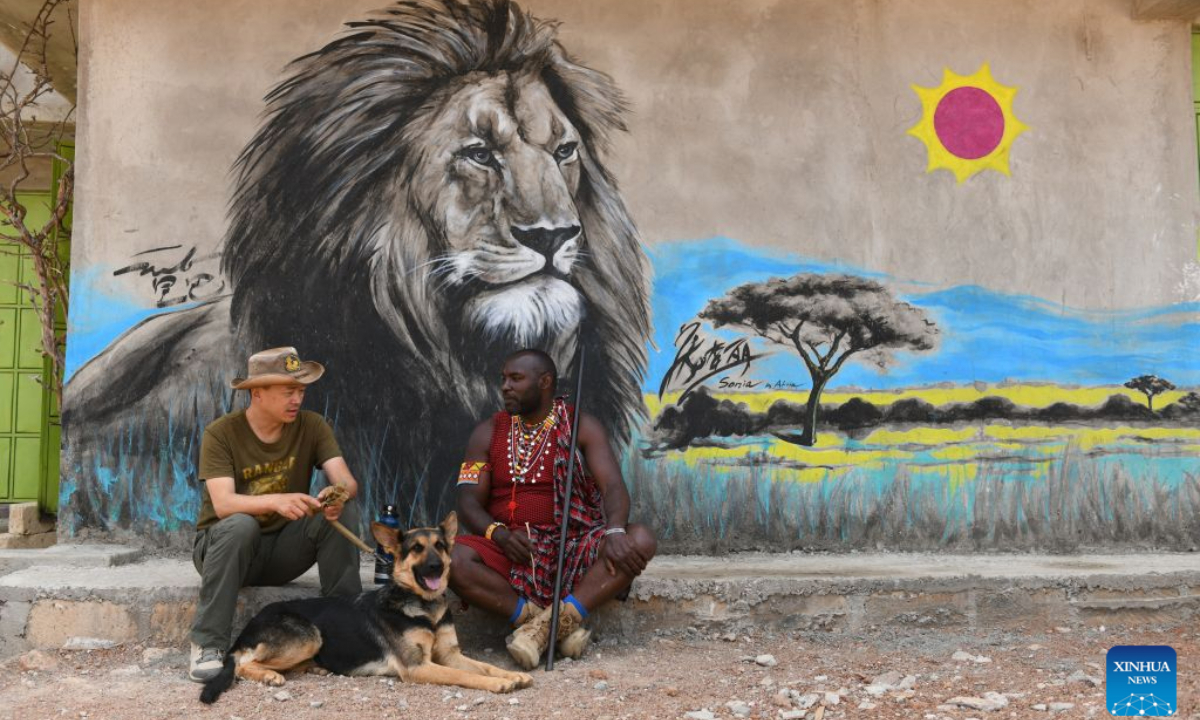
Zhuo Qiang (L) talks with Simon Msago, a Maasai community leader in Ngoswani, in Narok, Kenya, Aug. 12, 2026. (Xinhua/Liu Qiong)As dawn breaks over Ol Kinyei Conservancy in Kenya's Maasai Mara ecosystem, rangers are already combing the grasslands for signs of unauthorized entry and poaching while keeping a close watch on wildlife.
Among them is Chinese conservationist Zhuo Qiang, nicknamed "Simba," the Swahili word for lion. For him, this early-morning routine is driven by a broader mission to achieve human-wildlife coexistence.
In 2010, Zhuo left his job in China at the age of 37 and embarked on a less-traveled path: pursuing wildlife conservation in Kenya.
Without professional training in wildlife conservation, he found himself in a territory then dominated by Western organizations and local practitioners.
But Zhuo decided to stay. "I wanted to prove that Chinese people could also do wildlife conservation," he said.
Initially, Zhuo saw conservation largely through the lens of wildlife science: working in the field, studying animals and collecting data.
Living and working with Maasai communities changed that perspective. "The fate of wildlife was closely tied to the people sharing the same land," he said.
In the Maasai Mara ecosystem, livestock grazing is deeply connected to the livelihoods of pastoral communities. "If local people are asked to stop grazing but are given no alternative source of income, conservation cannot be sustainable," Zhuo said.
That principle laid the foundation for his work with the local community in establishing the Ol Kinyei Conservancy.
The area had suffered from prolonged overgrazing, with plants and the land itself deteriorating. Under the conservation model, local grazing land was leased and gradually restored, allowing vegetation to recover and creating a more suitable habitat for wildlife, said Zhuo.
Meanwhile, households participating in the scheme receive land-rental income and have access to jobs such as wildlife rangers and tourism workers. Their average annual income has increased from around 500 U.S. dollars to about 3,700 dollars, according to Zhuo.
Some residents from surrounding communities also learned from the experience and brought the approach back to their own grazing areas.
Nowadays, 26 private conservancies have been established around the Maasai Mara National Reserve, covering about 1,600 square km, according to Zhuo.
He believes the network of community conservancies provides additional safe space for wildlife to move and survive, extending conservation efforts beyond the boundaries of a single national reserve and into surrounding communities.
Simon Msago, a Maasai community leader in Ngoswani, said Zhuo's work encouraged more residents to take an active role in conservation.
In the past, many residents saw few direct benefits from wildlife conservation and had limited awareness of its importance. Today, community members are increasingly willing to work as rangers and protect wildlife, creating an effective layer of protection around the conservancies, Msago said.
"Human-wildlife conflict cannot be solved simply through restrictions and prohibitions. The key is to create alternative sources of income so that residents can gain tangible benefits from conservation," Zhuo said.
"That is what makes community-based conservation sustainable -- allowing local people to become part of wildlife conservation rather than bystanders with no stake in it."
While continuing his work in the Maasai Mara, Zhuo has also sought to strengthen exchanges between China and Africa in wildlife conservation.
In recent years, he has visited more than 30 nature reserves and national parks in China, sharing his experiences of community-based conservation in Africa with Chinese counterparts.
"Conservation practices in China and Africa each have their own characteristics, and there is much that the two sides can learn from each other," he added.
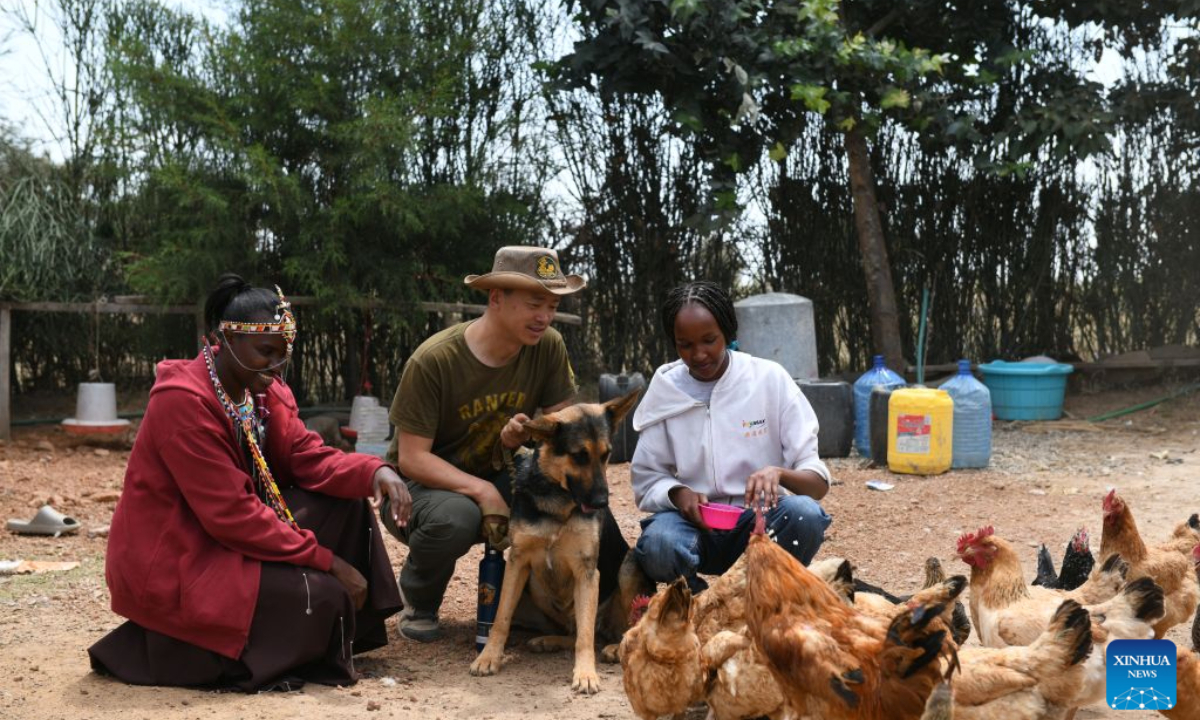
Zhuo Qiang (C) checks the chickens raised by local residents in Narok, Kenya, Aug. 12, 2026. (Xinhua/Liu Qiong)
。 来源:【江阴日报-江阴网】据中国地震台网正式测定,1月7日9时5分在西藏日喀则市定日县发生6.8级地震,震源深度10公里,震中位于北纬28.50度,东经87.45度。基础背景附近村镇:本次地震周边5公里内的村庄有塘仁村、雪珠村、嘎热果吉村、美朵村、查吉、拉仓、康穷,20公里内的乡镇有措果乡、曲洛乡。边县城:震中距定结县34公里、距定日县36公里、距拉孜县67公里、距萨迦县71公里、距昂仁县92公里,距日喀则市164公里,距拉萨市379公里。震中地形:震中5公里范围内平均海拔约4259米。

B | 历史地震:根据中国地震台网速报目录,震中周边200公里内近5年来发生3级以上地震共29次,最大地震是本次地震,历史地震分布如图。本文来自【江阴日报-江阴网】,仅代表作者观点。

C | 全国党媒信息公共平台提供信息发布传播服务。
Current article:http://5tpt5i.wairanleichengwochengzhui.shop/qkr/20260826/960946.html
Published on:14:28:20